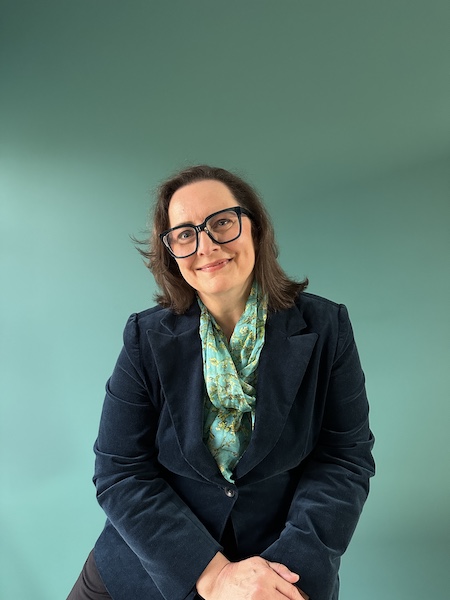
I support people with recovery from religious trauma and spiritual abuse, and the rebuilding of identity.

Online | Sydney's Inner West

I support people with recovery from religious and spiritual trauma, narcissistic abuse, and the rebuilding of identity.

Online | Sydney’s Inner West

Welcome

Healing can often feel like a slow return to yourself. Being brave with a trusted listener can help process life’s challenges and move through the strong emotions that can make us feel like the ground is giving way.

I work with people navigating faith deconstruction, religious and spiritual trauma and narcissistic abuse; cult recovery and harm experienced in faith settings.

I’d love to support you to heal, grow and learn more about yourself. I see clients in-person in Marrickville in Sydney’s Inner West and offer online sessions for clients across Australia and New Zealand. You can get in touch here to make a counselling appointment or here if you’d like a free 15 minute intro call. 

No matter where our stories have taken us, we all just want to be ok, to feel like we can cope, find connection and meaning. Counselling and psychotherapy has been a powerful guide for me in this way. My role is to offer that to you too.

Ways to connect | Subscribe to my weekly-ish email, How to be Ok, here. It’s about ways to, be ok, when life feels big. 

You can read my eBook on leaving religious fundamentalism here, and I write regularly on Substack. 

And, I’m over at the The Religious Trauma Collective, now Religious Trauma & Cults which I co-founded in 2024. 

A Little more

ways you can work with me.

I support therapists wanting to know more about the big topic that is religious trauma through my online course What I Wish My Therapist Knew.

I work with people experiencing it themselves, including cult survivors and those living with the impact of harm in high-control spaces. 

I support people through trauma healing. Our bodies know how to heal from a broken arm and from trauma. Havening techniques® are a beautiful way to bring these together. 

I offer online courses to provide accessible and flexible learning for those seeking to understand and heal from Religious Trauma.

What I wish my therapist knew about Religious Trauma is for therapists wanting language and consolidated resources for working with clients who have experienced religious trauma. It includes my own story, The Sentimental Non-Believer.

Freedom from Religious Trauma is for those who have experienced the pain of disconnection from faith and/or faith communities and are seeking healing. It’s the course I needed as the ground gave way beneath me. It’s loaded with ways to understand what you’re going through, tools for grounding and settling yourself when emotions feel big, and ways to rebuild community and spirituality.

Find out more here.

Havening techniques® also known as Havening Touch, create a safe haven, a healing environment in the brain.

Repetitive movements that you do yourself – you can choose from rubbing your hands together, downward shoulder strokes, strokes above the eyebrows and then action of wiping away tears – can ground and centre us.

When done in a guided way, while naming emotions and doing exercises to distract the brain, these can also result in the memory centre of our brain filing distressing events where they belong, in the past. Not as live events crashing into the present and causing distress.

If you named your reactivity at a 9 or a 10 before the exercise, this process can take it down to 0. And it stays there. Here’s an illustration of how.

You can book a Havening session or get in touch to find out more about this powerful modality, here.

Counselling allows you to talk freely about areas in your life where you’re feeling stuck or in pain and where you can feel your emotions without judgement. It’s a guided, safe and confidential space. 

I’m an integrative therapist and also incorporate psychotherapy tools such as Havening and embodied processing as well as a number of other modalities.

I offer online sessions across Australia and New Zealand and in-person sessions from my Marrickville room in Sydney’s Inner West. 

You can read more here.

I also offer a free 15 minute intro chat so you can ask anything else you’d like to know, which you can book here.

Grab a coffee & join me on Substack

FAQs

Religious trauma includes but isn’t just about obvious abusive experiences that we can point to. It’s what happens to your nervous system, your sense of Self, and your capacity to trust, when a religious environment has been harmful, controlling, or shaming, even in very ordinary ways.

It can show up as chronic guilt you can’t explain, difficulty trusting your own instincts, a persistent sense that you’re not quite enough, hypervigilance, or the exhaustion of having monitored yourself for years. You don’t need to have left, or to have been part of something sensationalist, for your experience to be real and worth working with. 

A faith crisis is a crisis of belief. Religious and spiritual trauma is a crisis of Self and you can have one without the other. Many people deconstructing their faith are not traumatised, and some people who are carrying real harm have never questioned their beliefs at all.

The distinction matters because it changes what kind of support is actually useful. Deconstruction can be an intellectual and spiritual process. Trauma needs something different as it lives in the body as much as the mind and can feel unsafe when we’re used to living as spiritual people seeking to overcome emotions and ‘the flesh.’

Spiritual abuse happens when spiritual authority is used to control, manipulate, or harm. It doesn’t require physical harm, and it doesn’t only happen in cults. It can look like shunning, shame used as a management tool, coercive accountability structures, or
leadership that can’t be questioned without consequence.

It can happen in any faith tradition, and it often doesn’t look like abuse from the inside, particularly when the people causing harm genuinely believe they are acting in your best interests and when behaviour like this is part of the air we breathe.

Narcissistic abuse in a religious context is particularly difficult to name because it looks like the spiritual authority we’re taught is the natural way of things. It can come from a dynamic leader whose behaviour goes unchallenged because of their position, or from
family members whose control was reinforced by religious frameworks that demanded compliance.

Both leave similar wounds; a distorted sense of your own reality, difficulty trusting your perceptions, and the work of rebuilding your Self when that was systematically undermined.

Because there’s a lag. The nervous system doesn’t update when the theology does. Guilt and shame that were conditioned over years, sometimes from childhood, don’t just disappear when you intellectually step away from the belief system that produced them. They’re stored in the body.

This is one of the most common things I hear. It tells us the work goes deeper than ideas. This guilt can and does shift in time and with attention and care.

Because the grief is real, and it should be. Community, ritual, belonging, a framework for meaning were real things, even if the container was harmful. Ambiguous loss, which is mourning something that also damaged you, is one of the most disorienting parts of this particular journey.

Missing church doesn’t mean you made the wrong decision, just that you’re in the free fall stage where you’ve left but haven’t quite found solid ground outside yet.

Yes, and often in ways that are hard to trace back to their source. Religious environments shape the nervous system at a formative stage. The rules absorbed before we had language for them are often the last to surface and the hardest to shift.

We don’t need to have had a dramatic or obviously abusive experience. The ordinary theology of many mainstream churches; about sin, worthiness, the body, gender, sexuality, or divine favour; can leave lasting imprints on how you move through the world
as an adult.

The conversation about religious and spiritual trauma in Australia and New Zealand is much younger than in other places and there’s less cultural language for it. I often say religion isn’t as baked in to our society as it is in North America for example and there’s less understanding overall. Which means many people are carrying something they don’t yet have a name for and therapists often struggle to understand.

Harm in faith spaces, including cults and the particular texture of evangelical and Pentecostal Christianity here, is what I have experience in and work with.

Absolutely. I work with people at every part of this continuum. Those still inside faith communities who are struggling, those in the middle of leaving, and those who left long ago and are still working through what that means. I’m not here to influence what you believe. I’m here for the parts that are causing pain and confusion.

Not everyone who is deconstructing needs to come to therapy but it can be helpful when; the process intersects with trauma, when important relationships are at stake, when your sense of identity feels destabilised, or when the grief is hard to hold alone.

I’m not here to tell you where to land with what you believe. I’m here for the whole person underneath the theology, to help you find your own ground again.